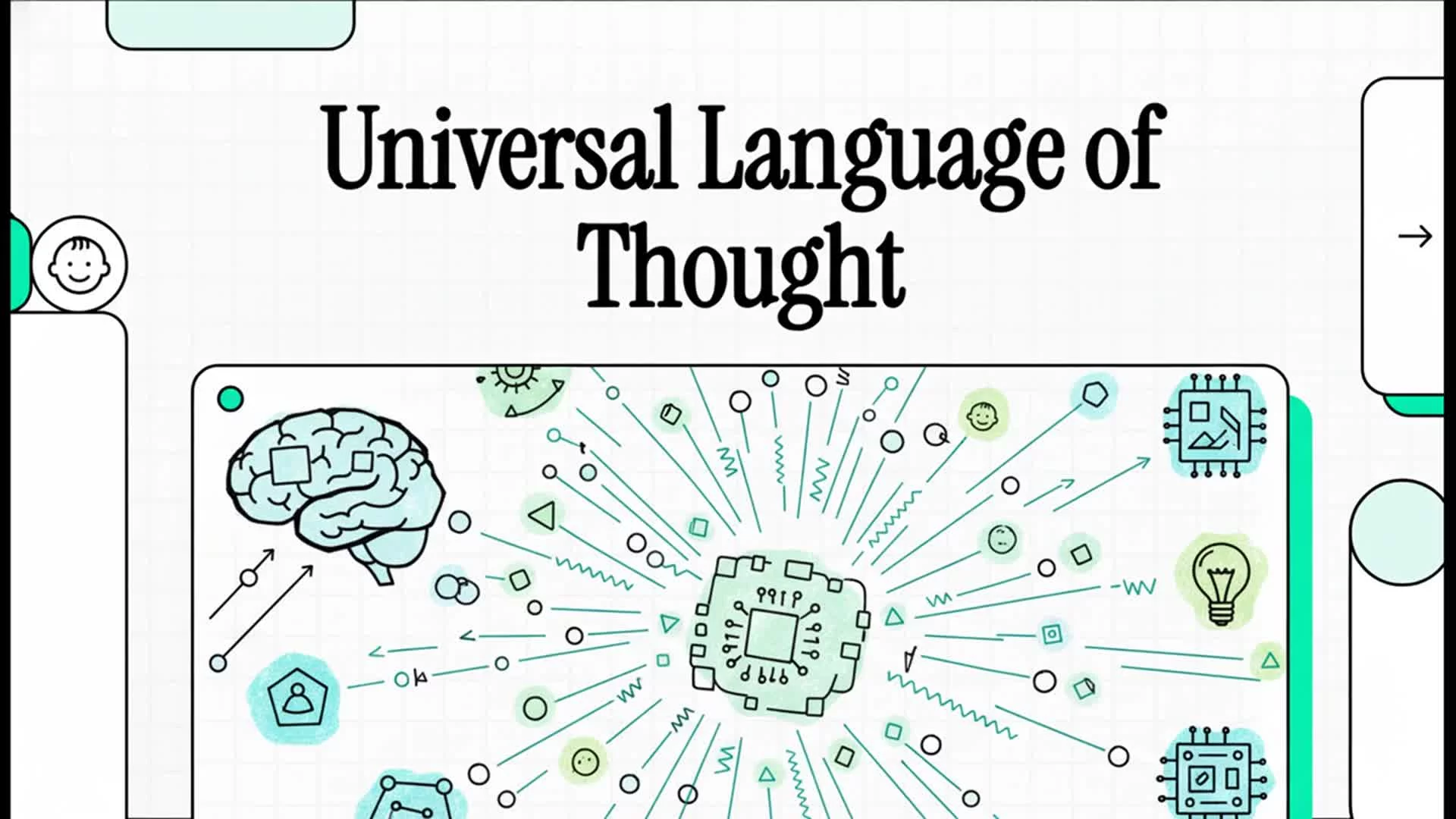
The Universal Language of Form
This video explores a universal cognitive architecture developed by thinker Sun Lee since 1976, proposing a structural language that connects internal ideas to physical reality (0:00-0:44).Key Concepts of the System:
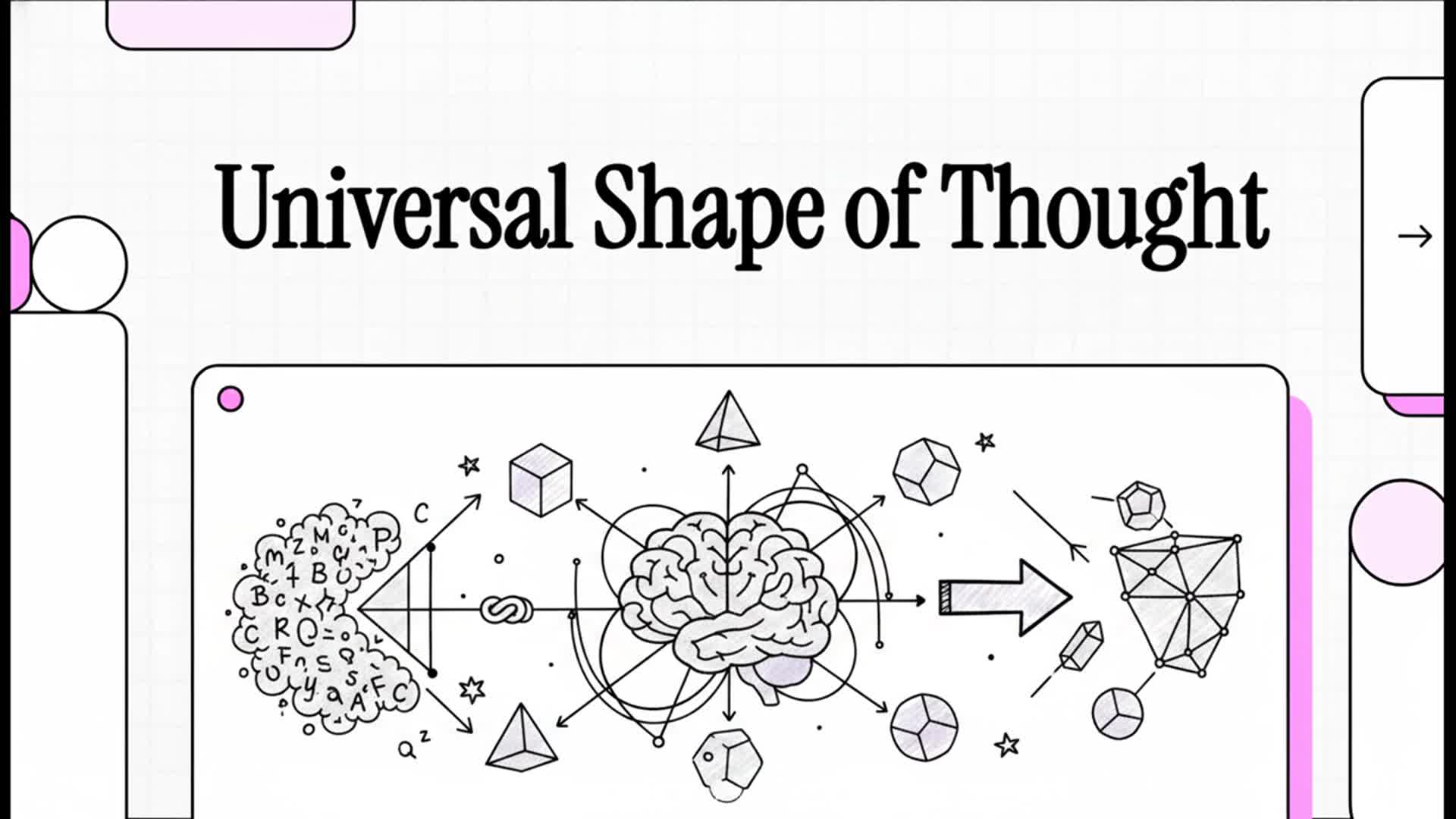
C-Space (Conceptual Space): The internal, topological world of abstract ideas and intentions (0:59-1:07).
S-Space (Structural Space): The external, geometrical world of physical objects and relationships (1:09-1:15).
Metamolds: The "atoms of meaning" created when a conceptual idea stabilizes by fusing with an external structural boundary (2:18-2:37). The stability of these forms is governed by precise mathematical laws (3:13-3:33).Connection to Ancient Wisdom:
The system claims a mathematical correspondence with the ancient Chinese I-Ching. The number of possible stable forms follows a binary progression (one, two, four, eight) that perfectly matches the I-Ching's foundation (3:35-4:10). This suggests that space and time are fundamentally linked (4:57-5:14).Implications for Artificial Intelligence:
The video proposes a "structure-first" approach to AI, where machines learn the fundamental grammar of forms and relationships before understanding specific concepts, mirroring human cognitive development (5:19-5:53).